






The leaders of the Democratic Republic of Congo and Rwanda are preparing to sign a peace agreement in Washington, even as violence continues in parts of eastern Congo. The deal, championed by U.S. President Donald Trump, comes amid persistent fighting involving M23 rebels and the Congolese army.
Washington Hosts Signing Ceremony
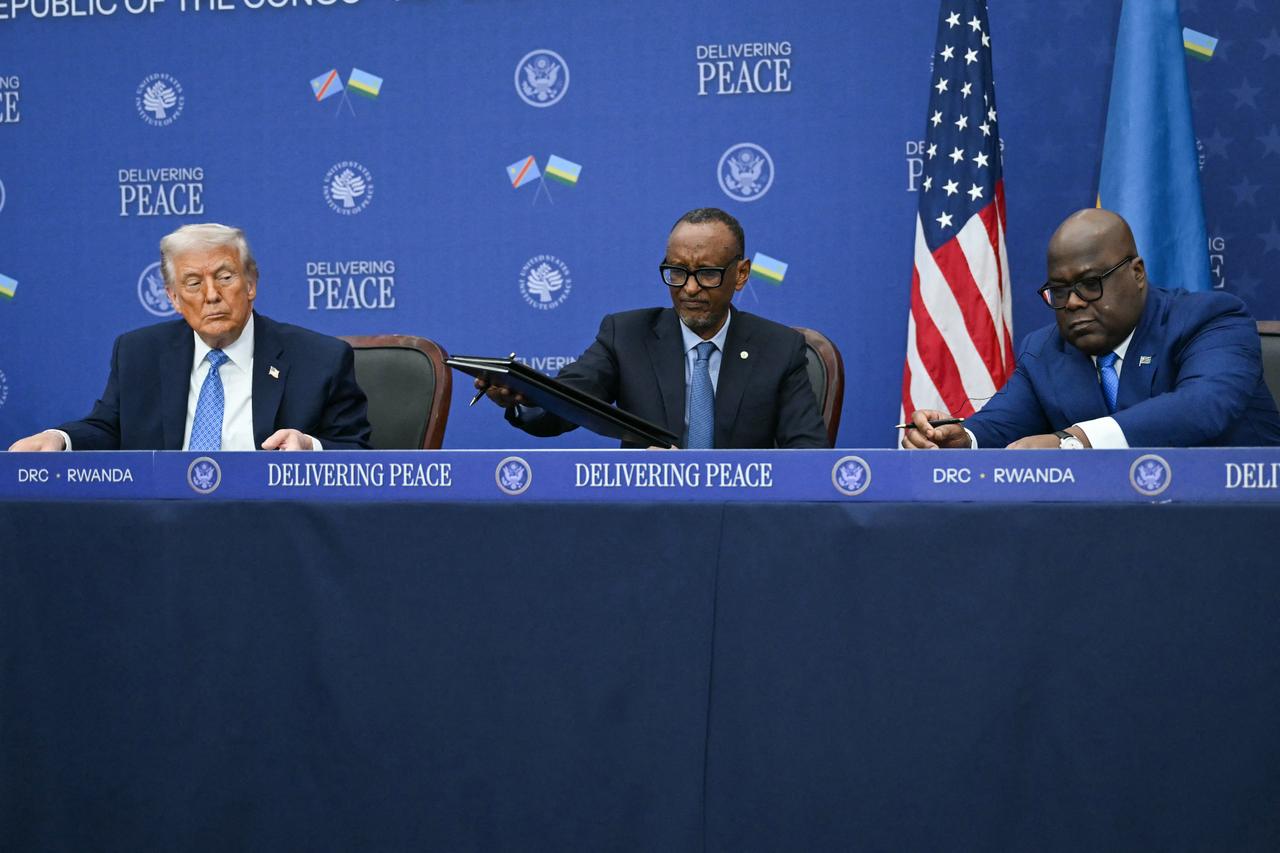
Rwandan President Paul Kagame and Congolese President Felix Tshisekedi reaffirmed their commitment to an economic integration pact approved last month and a peace framework finalized in June. The two leaders were also expected to endorse a separate agreement on critical minerals.
The event marks another high-profile diplomatic moment for Trump, despite the contrast between the ceremony in Washington and the volatile situation on the ground. The United States has pushed for stronger ties with Congo to secure access to key minerals while countering China’s expanding influence in the sector.
Trump Highlights Long-Running Conflict
Trump described the deal as a step toward ending decades of conflict. “They spent a lot of time killing each other,” he said, “and now they’re going to spend time holding hands and benefiting economically from the United States.”
The signing took place at a peace institute temporarily rebranded with Trump’s name by his administration. Kagame and Tshisekedi joined Trump on stage as the agreements were exchanged.
Violence Persists in Eastern Congo
Even as the leaders met in Washington, reports of clashes continued in South Kivu province. The Congolese army and M23 rebels traded accusations, with the rebel group claiming government forces bombed civilian areas.
Earlier this year, M23 seized two major cities in eastern Congo, heightening fears of a broader conflict. Analysts note that U.S. diplomacy has slowed the pace of escalation but has not resolved the root causes of the crisis.
A White House official said the signing represents a renewed commitment to the peace process and reflects months of focused engagement by the Trump administration.
U.S. Pushes Diplomatic Agenda
Since returning to office in January, Trump has intensified U.S. involvement in several global crises. His administration has hosted multiple high-visibility signing ceremonies across different regions. The outcomes have been mixed, contributing to both diplomatic achievements and domestic criticism.
Hours before the signing, Trump’s name was added to a sign at the U.S. Institute of Peace—an institution currently at the center of a legal dispute over administrative control.
Little Relief for Humanitarian Conditions
Despite the new agreement, the situation in eastern Congo remains dire. Both Congo’s army and M23 accuse each other of violating previous ceasefire arrangements. Congolese government spokesperson Patrick Muyaya said recent attacks prove that “Rwanda doesn’t want peace,” a claim Kigali denies.
M23 did not attend the Washington talks and is not bound by the terms of the Congo–Rwanda deal. The group is engaged in separate Qatar-mediated negotiations.
Nobel Peace Prize laureate Denis Mukwege criticized the Washington agreement, saying it was more about competition over mineral resources than genuine efforts to end violence. He pointed to ongoing burials in his home village on the same day the deal was signed.
Rwanda Rejects Accusations of Supporting Rebels
Rwanda has long denied supporting M23, saying its security operations target armed groups linked to the 1994 genocide. However, a panel of U.N. experts reported in July that Rwanda exercises command over the rebel movement.
M23 claims it is fighting to defend ethnic Tutsi communities in eastern Congo, continuing a decades-long cycle of ethnic conflict in the region.
A Historically Volatile Region
The Great Lakes region has faced repeated rounds of conflict since the 1990s. Two devastating wars between 1996 and 2003 claimed millions of lives. The latest wave of fighting has already killed thousands and displaced hundreds of thousands.
Critical Minerals at the Center of Negotiations
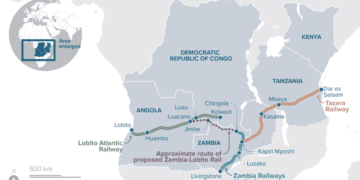
The United States is pushing to expand Western investment in a region rich in cobalt, copper, gold, lithium, tungsten, tantalum, and other minerals vital for modern industries.
Under the U.S.-backed framework, Congo must act against an anti-M23 militia known as the Democratic Forces for the Liberation of Rwanda, while Rwanda is expected to withdraw its troops from Congolese territory. Progress on both commitments has been minimal since June.
Kagame welcomed what he called a “new and effective dynamism” brought by Trump, while Tshisekedi described the agreement as a “turning point.”