




Thursday, March 19, 2026
The Latest World News | The Envoy Post
  • Horn of Africa
    • All
    • Ethiopia
    • Kenya
    • Somalia
    • Sudan
    Somalia ends all agreements with UAE

    Somalia ends all agreements with UAE

    Israel recognition of Somaliland sparks worldwide backlash

    Israel recognition of Somaliland sparks worldwide backlash

    Severe drought expands across Somalia as millions face crisis

    Severe drought expands across Somalia as millions face crisis

    El Fasher falls to RSF after yearlong siege in Darfur

    El Fasher falls to RSF after yearlong siege in Darfur

    RSF captures El Fasher, tightening grip on Darfur

    RSF captures El Fasher, tightening grip on Darfur

    Thousands gather in Nairobi for Raila Odinga’s state funeral

    Thousands gather in Nairobi for Raila Odinga’s state funeral

  • Middle East
  • Word
  • Analysis
  • Opinion
    Gulf security crisis forces rethink of U.S. protection

    Gulf security crisis forces rethink of U.S. protection

    Can Africa create a new governance model beyond colonial-era systems?

    Can Africa create a new governance model beyond colonial-era systems?

    Why the West underestimated Türkiye’s defence ambitions

    Why the West underestimated Türkiye’s defence ambitions

    Kizilelma becomes first UAV to down jet target

    Kizilelma becomes first UAV to down jet target

  • Economy & Business
    • All
    • Infrastructure
    • Investment
    Mining, debt and currency risk: Zambia’s Yuan move in an African context

    Mining, debt and currency risk: Zambia’s Yuan move in an African context

    TAZARA and Lobito: Africa’s New Geopolitical Corridors

    TAZARA and Lobito: Africa’s New Geopolitical Corridors

    Kenya set to become East Africa’s largest economy by 2025

    Kenya set to become East Africa’s largest economy by 2025

    Rare earths: The hidden metals powering China’s trade leverage

    Rare earths: The hidden metals powering China’s trade leverage

  • Culture & Society
    • All
    • Heritage
    • Society
    Why humans love sharing meals and eating together

    Why humans love sharing meals and eating together

    Finland named world’s happiest country for the eighth year in a row

    Finland named world’s happiest country for the eighth year in a row

    Ethiopians gather in Addis Ababa to celebrate Irreecha Festival

    Ethiopians gather in Addis Ababa to celebrate Irreecha Festival

    Swahili coast heritage: A living legacy of Zanzibar, Lamu, and coastal East Africa

    Swahili coast heritage: A living legacy of Zanzibar, Lamu, and coastal East Africa

    Ancient manuscripts in Timbuktu digitized for global access

    Ancient manuscripts in Timbuktu digitized for global access

    Morocco’s crafts find new life online

    Morocco’s crafts find new life online

  • Explainers
  • About
No Result
View All Result
  • Horn of Africa
    • All
    • Ethiopia
    • Kenya
    • Somalia
    • Sudan
    Somalia ends all agreements with UAE

    Somalia ends all agreements with UAE

    Israel recognition of Somaliland sparks worldwide backlash

    Israel recognition of Somaliland sparks worldwide backlash

    Severe drought expands across Somalia as millions face crisis

    Severe drought expands across Somalia as millions face crisis

    El Fasher falls to RSF after yearlong siege in Darfur

    El Fasher falls to RSF after yearlong siege in Darfur

    RSF captures El Fasher, tightening grip on Darfur

    RSF captures El Fasher, tightening grip on Darfur

    Thousands gather in Nairobi for Raila Odinga’s state funeral

    Thousands gather in Nairobi for Raila Odinga’s state funeral

  • Middle East
  • Word
  • Analysis
  • Opinion
    Gulf security crisis forces rethink of U.S. protection

    Gulf security crisis forces rethink of U.S. protection

    Can Africa create a new governance model beyond colonial-era systems?

    Can Africa create a new governance model beyond colonial-era systems?

    Why the West underestimated Türkiye’s defence ambitions

    Why the West underestimated Türkiye’s defence ambitions

    Kizilelma becomes first UAV to down jet target

    Kizilelma becomes first UAV to down jet target

  • Economy & Business
    • All
    • Infrastructure
    • Investment
    Mining, debt and currency risk: Zambia’s Yuan move in an African context

    Mining, debt and currency risk: Zambia’s Yuan move in an African context

    TAZARA and Lobito: Africa’s New Geopolitical Corridors

    TAZARA and Lobito: Africa’s New Geopolitical Corridors

    Kenya set to become East Africa’s largest economy by 2025

    Kenya set to become East Africa’s largest economy by 2025

    Rare earths: The hidden metals powering China’s trade leverage

    Rare earths: The hidden metals powering China’s trade leverage

  • Culture & Society
    • All
    • Heritage
    • Society
    Why humans love sharing meals and eating together

    Why humans love sharing meals and eating together

    Finland named world’s happiest country for the eighth year in a row

    Finland named world’s happiest country for the eighth year in a row

    Ethiopians gather in Addis Ababa to celebrate Irreecha Festival

    Ethiopians gather in Addis Ababa to celebrate Irreecha Festival

    Swahili coast heritage: A living legacy of Zanzibar, Lamu, and coastal East Africa

    Swahili coast heritage: A living legacy of Zanzibar, Lamu, and coastal East Africa

    Ancient manuscripts in Timbuktu digitized for global access

    Ancient manuscripts in Timbuktu digitized for global access

    Morocco’s crafts find new life online

    Morocco’s crafts find new life online

  • Explainers
  • About
No Result
View All Result
The Latest World News | The Envoy Post
No Result
View All Result
Home Opinion

Gulf security crisis forces rethink of U.S. protection

The 2026 war has deepened doubts about whether Washington still offers reliable regional cover.

Abbas Faraade by Abbas Faraade
March 19, 2026
in Opinion
Reading Time: 9 mins read
0
Gulf security crisis forces rethink of U.S. protection
485
VIEWS
Share on FacebookShare on Twitter

Gulf security has entered a period of deep uncertainty. The long-standing bargain in which Gulf monarchies helped anchor energy stability while the United States provided military protection no longer looks secure. Under the pressure of the 2026 regional war, that arrangement appears more conditional, more selective and less reliable than many Gulf leaders once believed.

This crisis is not only about missiles, ports or gas fields. It is also about trust. Gulf states are confronting a harder lesson about external protection: an alliance can become a liability when the stronger partner defines its interests more narrowly than its allies expected.

The old Gulf security bargain is under strain

For decades, the U.S.-Gulf relationship rested on a simple strategic formula. Washington treated Gulf energy flows as a core interest, while Gulf states treated American power as the ultimate deterrent against major threats. That formula shaped regional politics for generations and encouraged the belief that, in a severe crisis, the U.S. security umbrella would hold.

RelatedPosts

Can Africa create a new governance model beyond colonial-era systems?

Why the West underestimated Türkiye’s defence ambitions

Kizilelma becomes first UAV to down jet target

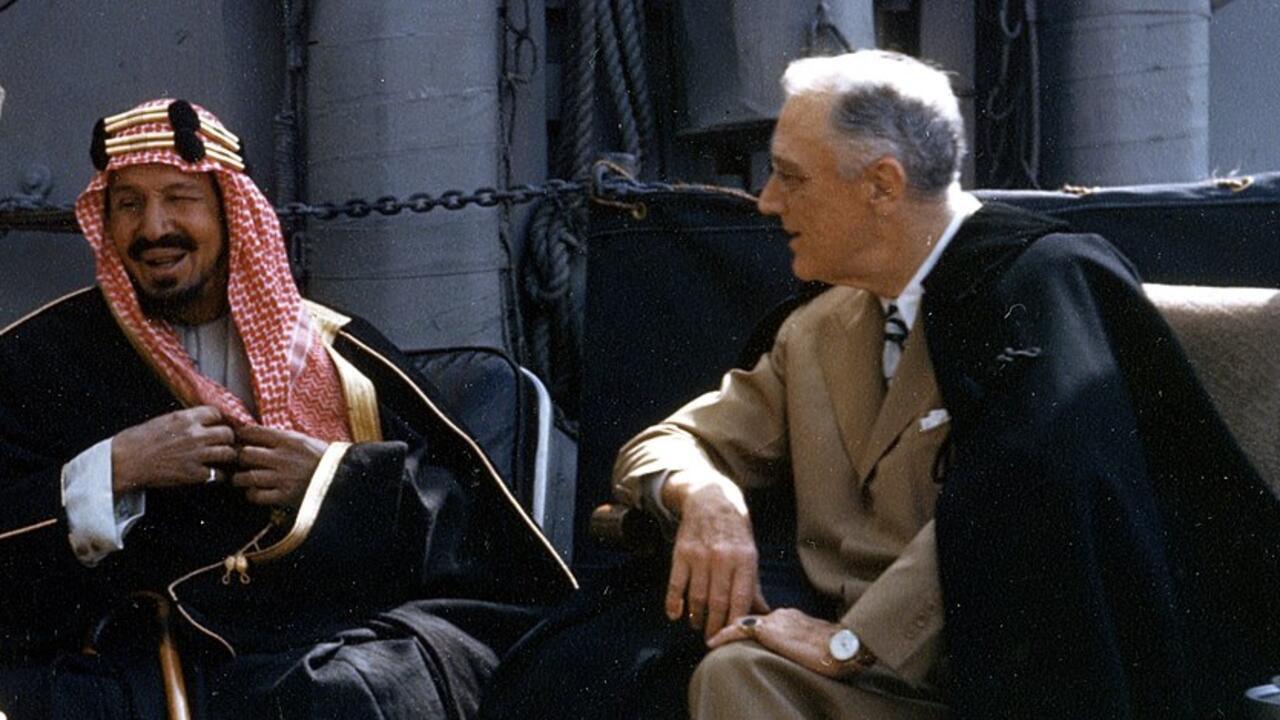
The roots of that framework stretch back to the mid-20th century. Over time, American policy turned Gulf stability into a central strategic concern. In return, Gulf governments built their security planning around the assumption that Washington would remain both willing and able to defend the regional order.

However, the regional environment changed well before the current war. The U.S. shale boom reduced Washington’s direct energy vulnerability. At the same time, Gulf leaders watched U.S. policy become more transactional, more selective and more closely tied to immediate American priorities. Therefore, the 2026 crisis did not create doubt from nothing. Instead, it exposed and accelerated doubts that had already been building.

That is why the latest escalation feels so consequential. Gulf capitals are not merely reacting to attacks. They are reassessing whether the security guarantee still functions as they once believed. If the answer is no, then the crisis is not only a military emergency. It is also the weakening of a broader strategic order.

A war Gulf states did not fully control

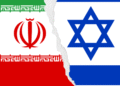
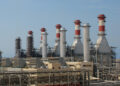
The turning point came when the wider U.S.-Israeli conflict with Iran spilled into Gulf energy and transport infrastructure. Israeli attacks on Iranian gas facilities triggered retaliation that reached into the Gulf itself. Tehran issued warnings for major Gulf energy sites, and attacks soon threatened production, transport and investor confidence across the region.

From the Gulf perspective, this was the most dangerous phase of the crisis. Regional states were no longer standing beside a distant security arrangement. Instead, they became the exposed geography through which escalation moved. Their ports, gas sites, oil infrastructure and airspace became part of the conflict environment.

That reality changed the meaning of the alliance. What once looked like a shield began to look like an arrangement that could pull Gulf states into wars whose timing, scope and escalation ladder they did not control. That shift matters because strategic guarantees are judged not only by their promises, but also by the risks they create for those who depend on them.

Politically, the sense of exposure is as important as the military damage. For years, Gulf leaders balanced close ties with Washington against regional diplomacy, hedging and quiet de-escalation. Once energy infrastructure became a target, however, that balancing strategy came under severe pressure. A partnership that brings retaliation onto your territory will inevitably be judged more harshly than one that deters it.

Why the crisis deepens doubts about Washington

The central criticism is not simply that the United States could not stop every missile or drone. In a dense and fast-moving threat environment, no outside power can guarantee perfect protection. The deeper complaint is that Washington appears to rank regional risks according to a hierarchy of interests in which U.S. priorities and Israeli security come first, while Gulf sovereignty carries much of the cost.

That perception has become even stronger because the current crisis also appears to create possible economic benefits for the United States. Rising energy prices can help American producers. Prolonged instability can increase demand for U.S. weapons, air defense systems and military services. In addition, reconstruction and rearmament may create long-term commercial opportunities.

None of that proves that Washington seeks chaos for its own sake. However, it does reinforce the argument that the United States can benefit from crises that impose far heavier burdens on its partners. That imbalance matters politically because it weakens the moral basis of the alliance. If one side absorbs the fire while the other side captures much of the strategic and economic gain, resentment is likely to grow.

Many Gulf observers reached a similar conclusion during the war in Ukraine. In that view, the United States benefited through expanded arms sales, stronger energy positioning and greater geopolitical leverage. Whether one accepts that argument completely or not, it now shapes how many regional elites interpret American behavior. In the current war, that skepticism has intensified. The message many Gulf policymakers hear is direct: Washington may remain committed, but it is committed to itself first.

That is why the language of betrayal has become more visible. Gulf states did not build their defense systems on the expectation that they would become the main arena for retaliation in a conflict driven by decisions elsewhere. Yet that is exactly what the present crisis has revealed. Once a guarantee stops reducing exposure, trust begins to erode quickly.

Gulf security now requires a new strategy

If this reading is correct, then Gulf states need more than temporary reassurance. They need a strategic reset. That does not require a full break with Washington, nor does it mean abandoning all existing military ties. It does mean reducing dependence on a single outside power whose commitments may remain strong in rhetoric but selective in practice.

First, Gulf countries are likely to accelerate domestic defense industrialization. Saudi Arabia and the United Arab Emirates have already invested heavily in local arms production, drone systems and defense technology. What once looked partly like prestige policy now looks much more like strategic necessity. In a region shaped by missile warfare and infrastructure vulnerability, local production and repair capacity matter.

Second, Gulf governments are likely to diversify their security partnerships. That may include deeper ties with Turkey, Pakistan and selected Asian states, along with more flexible procurement and coproduction deals. A diversified network does not remove risk. It does, however, provide more room to maneuver and lowers the danger of overdependence on one patron.

Third, regional diplomacy will matter more, not less. The current crisis shows that Gulf states cannot outsource all deterrence while neglecting political channels with rivals. Even modest de-escalation mechanisms can help reduce the chance that Gulf infrastructure becomes the first casualty of outside strategic calculations.

The future may be more autonomous and more volatile

The old order is unlikely to return in its previous form. Even if the fighting subsides, the political shock will remain. Once allies conclude that protection is conditional, selective or self-interested, they begin planning for another future. That process is already visible across the Gulf.

The replacement order, however, is unlikely to be neat or stable. It will probably be more fragmented and more competitive. Gulf states will seek greater autonomy, but they will do so in a region still shaped by great-power rivalry, energy insecurity and unresolved confrontation with Iran. As a result, the next system may be more resilient in some ways, yet also more volatile.

That is the central lesson of the 2026 crisis. The United States remains powerful, influential and militarily important in many respects. Yet power alone does not sustain alliances. Credibility does. For many in the Gulf, that credibility has weakened sharply.

In the end, Gulf security can no longer rest on assumptions shaped by another era. The region’s leaders now face a strategic choice. They can continue to treat Washington as an indispensable guarantor, or they can begin treating it as one important partner among several. That choice may shape the Gulf’s future long after the fires at energy sites are gone.

Author

  • Abbas Faraade

    Abbas Faraade is an editor of The Envoy Post, International Relations scholar, Middle East Political analyst, and media professional. He brings context and clarity to global affairs through The Envoy Post, reaching a worldwide audience with insightful coverage.

Tags: energy securityGulf crisis 2026Gulf monarchiesGulf securityIran-Israel conflictMiddle East securityregional realignmentstrategic autonomyU.S.-Gulf relations
Previous Post

Iran-Israel tensions raise fears of wider regional crisis

Related Posts

Can Africa create a new governance model beyond colonial-era systems?
Opinion

Can Africa create a new governance model beyond colonial-era systems?

March 19, 2026
Why the West underestimated Türkiye’s defence ambitions
Opinion

Why the West underestimated Türkiye’s defence ambitions

December 11, 2025
Kizilelma becomes first UAV to down jet target
Opinion

Kizilelma becomes first UAV to down jet target

March 19, 2026
Somalia needs a strong national army, not endless foreign troops
Opinion

Somalia needs a strong national army, not endless foreign troops

March 19, 2026
Pro-Palestine Protests: A Global Movement Shaping Political Decisions
Opinion

Pro-Palestine Protests: A Global Movement Shaping Political Decisions

September 27, 2025
Western unity crumbles as allies push back on U.S. stance toward Israel
Opinion

Western unity crumbles as allies push back on U.S. stance toward Israel

November 23, 2025

Leave a Reply Cancel reply

Your email address will not be published. Required fields are marked *

I agree to the Terms & Conditions and Privacy Policy.

  • Trending
  • Comments
  • Latest
Rare earths: The hidden metals powering China’s trade leverage

Rare earths: The hidden metals powering China’s trade leverage

December 10, 2025
TAZARA and Lobito: Africa’s New Geopolitical Corridors

TAZARA and Lobito: Africa’s New Geopolitical Corridors

March 19, 2026
Mining, debt and currency risk: Zambia’s Yuan move in an African context

Mining, debt and currency risk: Zambia’s Yuan move in an African context

March 19, 2026
Why the West underestimated Türkiye’s defence ambitions

Why the West underestimated Türkiye’s defence ambitions

December 11, 2025
Ukraine Fatigue: Will Western support hold in a long war?

Ukraine Fatigue: Will Western support hold in a long war?

2
UN urges immediate ceasefire after deadly drone strike in Sudan’s El-Fasher

UN urges immediate ceasefire after deadly drone strike in Sudan’s El-Fasher

2
Tanzania votes amid opposition ban and reports of unrest

Tanzania votes amid opposition ban and reports of unrest

1
Hong Kong firefighters battle deadly blaze for second day

Hong Kong firefighters battle deadly blaze for second day

1
Gulf security crisis forces rethink of U.S. protection

Gulf security crisis forces rethink of U.S. protection

March 19, 2026
Iran-Israel tensions raise fears of wider regional crisis

Iran-Israel tensions raise fears of wider regional crisis

March 19, 2026
Iran retaliation hits Gulf energy sites after gasfield strike

Iran retaliation hits Gulf energy sites after gasfield strike

March 19, 2026
South Pars strike pushes oil prices higher worldwide

South Pars strike pushes oil prices higher worldwide

March 19, 2026

Recent News

Gulf security crisis forces rethink of U.S. protection

Gulf security crisis forces rethink of U.S. protection

March 19, 2026
Iran-Israel tensions raise fears of wider regional crisis

Iran-Israel tensions raise fears of wider regional crisis

March 19, 2026
Iran retaliation hits Gulf energy sites after gasfield strike

Iran retaliation hits Gulf energy sites after gasfield strike

March 19, 2026
South Pars strike pushes oil prices higher worldwide

South Pars strike pushes oil prices higher worldwide

March 19, 2026

Gulf security crisis forces rethink of U.S. protection

Iran-Israel tensions raise fears of wider regional crisis

Iran retaliation hits Gulf energy sites after gasfield strike

South Pars strike pushes oil prices higher worldwide

How PURL is shaping Ukraine’s path to peace talks

Iran confirms security chief Ali Larijani killed in air strike

Gulf security crisis forces rethink of U.S. protection

Gulf security crisis forces rethink of U.S. protection

March 19, 2026
Iran-Israel tensions raise fears of wider regional crisis

Iran-Israel tensions raise fears of wider regional crisis

March 19, 2026
Iran retaliation hits Gulf energy sites after gasfield strike

Iran retaliation hits Gulf energy sites after gasfield strike

March 19, 2026
South Pars strike pushes oil prices higher worldwide

South Pars strike pushes oil prices higher worldwide

March 19, 2026
How PURL is shaping Ukraine’s path to peace talks

How PURL is shaping Ukraine’s path to peace talks

March 19, 2026
Iran confirms security chief Ali Larijani killed in air strike

Iran confirms security chief Ali Larijani killed in air strike

March 19, 2026
Facebook Twitter LinkedIn Instagram
The Latest World News | The Envoy Post

The Envoy Post delivers reliable global news, insightful opinion, in-depth analysis, culture, history, and features, offering readers independent perspectives on world affairs, society, and issues shaping our shared future.

Follow Us

Browse by Category

  • Africa
  • Americas
  • Analysis
  • Asia
  • Backgrounders
  • Culture & Society
  • Economy & Business
  • Ethiopia
  • Europe
  • Explainers
  • Gaza Genocide
  • Global Diplomacy
  • Heritage
  • Horn of Africa
  • Infrastructure
  • Investment
  • Iran
  • Iran War
  • Israel-Palestine
  • Kenya
  • Middle East
  • Opinion
  • Society
  • Somalia
  • Sudan
  • Türkiye
  • Uncategorized
  • Word

© 2025 The Envoy Post. All rights reserved.

No Result
View All Result
  • Horn of Africa
  • Middle East
  • Word
  • Analysis
  • Opinion
  • Economy & Business
  • Culture & Society
  • Explainers
  • About

© 2025 The Envoy Post. All rights reserved.

This website uses cookies. By continuing to use this website you are giving consent to cookies being used. Visit our Privacy and Cookie Policy.