




Thursday, March 19, 2026
The Latest World News | The Envoy Post
  • Horn of Africa
    • All
    • Ethiopia
    • Kenya
    • Somalia
    • Sudan
    Somalia ends all agreements with UAE

    Somalia ends all agreements with UAE

    Israel recognition of Somaliland sparks worldwide backlash

    Israel recognition of Somaliland sparks worldwide backlash

    Severe drought expands across Somalia as millions face crisis

    Severe drought expands across Somalia as millions face crisis

    El Fasher falls to RSF after yearlong siege in Darfur

    El Fasher falls to RSF after yearlong siege in Darfur

    RSF captures El Fasher, tightening grip on Darfur

    RSF captures El Fasher, tightening grip on Darfur

    Thousands gather in Nairobi for Raila Odinga’s state funeral

    Thousands gather in Nairobi for Raila Odinga’s state funeral

  • Middle East
  • Word
  • Analysis
  • Opinion
    Gulf security crisis forces rethink of U.S. protection

    Gulf security crisis forces rethink of U.S. protection

    Can Africa create a new governance model beyond colonial-era systems?

    Can Africa create a new governance model beyond colonial-era systems?

    Why the West underestimated Türkiye’s defence ambitions

    Why the West underestimated Türkiye’s defence ambitions

    Kizilelma becomes first UAV to down jet target

    Kizilelma becomes first UAV to down jet target

  • Economy & Business
    • All
    • Infrastructure
    • Investment
    Mining, debt and currency risk: Zambia’s Yuan move in an African context

    Mining, debt and currency risk: Zambia’s Yuan move in an African context

    TAZARA and Lobito: Africa’s New Geopolitical Corridors

    TAZARA and Lobito: Africa’s New Geopolitical Corridors

    Kenya set to become East Africa’s largest economy by 2025

    Kenya set to become East Africa’s largest economy by 2025

    Rare earths: The hidden metals powering China’s trade leverage

    Rare earths: The hidden metals powering China’s trade leverage

  • Culture & Society
    • All
    • Heritage
    • Society
    Why humans love sharing meals and eating together

    Why humans love sharing meals and eating together

    Finland named world’s happiest country for the eighth year in a row

    Finland named world’s happiest country for the eighth year in a row

    Ethiopians gather in Addis Ababa to celebrate Irreecha Festival

    Ethiopians gather in Addis Ababa to celebrate Irreecha Festival

    Swahili coast heritage: A living legacy of Zanzibar, Lamu, and coastal East Africa

    Swahili coast heritage: A living legacy of Zanzibar, Lamu, and coastal East Africa

    Ancient manuscripts in Timbuktu digitized for global access

    Ancient manuscripts in Timbuktu digitized for global access

    Morocco’s crafts find new life online

    Morocco’s crafts find new life online

  • Explainers
  • About
No Result
View All Result
  • Horn of Africa
    • All
    • Ethiopia
    • Kenya
    • Somalia
    • Sudan
    Somalia ends all agreements with UAE

    Somalia ends all agreements with UAE

    Israel recognition of Somaliland sparks worldwide backlash

    Israel recognition of Somaliland sparks worldwide backlash

    Severe drought expands across Somalia as millions face crisis

    Severe drought expands across Somalia as millions face crisis

    El Fasher falls to RSF after yearlong siege in Darfur

    El Fasher falls to RSF after yearlong siege in Darfur

    RSF captures El Fasher, tightening grip on Darfur

    RSF captures El Fasher, tightening grip on Darfur

    Thousands gather in Nairobi for Raila Odinga’s state funeral

    Thousands gather in Nairobi for Raila Odinga’s state funeral

  • Middle East
  • Word
  • Analysis
  • Opinion
    Gulf security crisis forces rethink of U.S. protection

    Gulf security crisis forces rethink of U.S. protection

    Can Africa create a new governance model beyond colonial-era systems?

    Can Africa create a new governance model beyond colonial-era systems?

    Why the West underestimated Türkiye’s defence ambitions

    Why the West underestimated Türkiye’s defence ambitions

    Kizilelma becomes first UAV to down jet target

    Kizilelma becomes first UAV to down jet target

  • Economy & Business
    • All
    • Infrastructure
    • Investment
    Mining, debt and currency risk: Zambia’s Yuan move in an African context

    Mining, debt and currency risk: Zambia’s Yuan move in an African context

    TAZARA and Lobito: Africa’s New Geopolitical Corridors

    TAZARA and Lobito: Africa’s New Geopolitical Corridors

    Kenya set to become East Africa’s largest economy by 2025

    Kenya set to become East Africa’s largest economy by 2025

    Rare earths: The hidden metals powering China’s trade leverage

    Rare earths: The hidden metals powering China’s trade leverage

  • Culture & Society
    • All
    • Heritage
    • Society
    Why humans love sharing meals and eating together

    Why humans love sharing meals and eating together

    Finland named world’s happiest country for the eighth year in a row

    Finland named world’s happiest country for the eighth year in a row

    Ethiopians gather in Addis Ababa to celebrate Irreecha Festival

    Ethiopians gather in Addis Ababa to celebrate Irreecha Festival

    Swahili coast heritage: A living legacy of Zanzibar, Lamu, and coastal East Africa

    Swahili coast heritage: A living legacy of Zanzibar, Lamu, and coastal East Africa

    Ancient manuscripts in Timbuktu digitized for global access

    Ancient manuscripts in Timbuktu digitized for global access

    Morocco’s crafts find new life online

    Morocco’s crafts find new life online

  • Explainers
  • About
No Result
View All Result
The Latest World News | The Envoy Post
No Result
View All Result
Home Analysis

Iran-Israel tensions raise fears of wider regional crisis

The long-running shadow conflict is becoming riskier for the Middle East and beyond.

Mohamed Adan by Mohamed Adan
March 19, 2026
in Analysis
Reading Time: 7 mins read
0
Iran-Israel tensions raise fears of wider regional crisis
300
VIEWS
Share on FacebookShare on Twitter

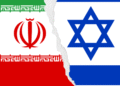
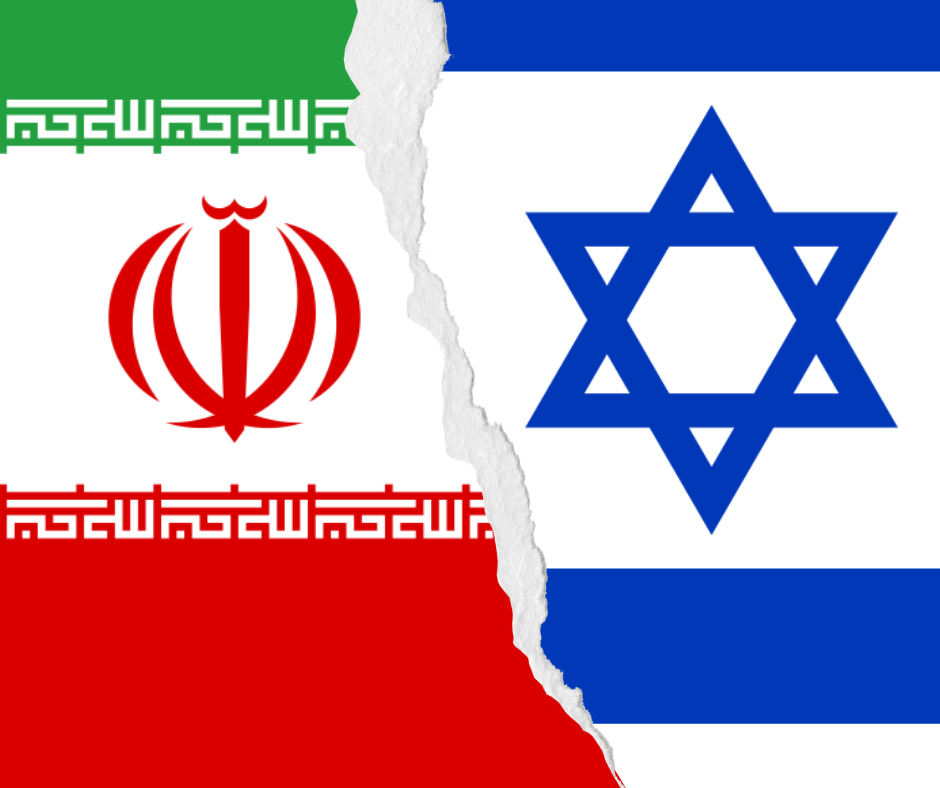
Iran-Israel tensions have shaped Middle East security for decades, mostly through indirect confrontation rather than open war. However, recent developments suggest that this long-running shadow conflict is becoming more exposed, more dangerous and harder to contain.

For years, both states relied on cyber activity, intelligence operations and regional proxies to pursue security goals without triggering full-scale interstate war. That model allowed each side to apply pressure while still preserving a measure of restraint. Today, that balance appears to be under growing strain.

From shadow conflict to greater exposure

The roots of the rivalry trace back to the 1979 Iranian Revolution, which transformed relations between Tehran and Tel Aviv. Since then, hostility has remained constant, although it has often unfolded through indirect means rather than direct conventional war.

RelatedPosts

No Content Available

Over time, Israel developed policies aimed at limiting Iran’s military and strategic reach across the region. These policies included cyber operations, intelligence activity and strikes on infrastructure linked to Iranian-aligned actors, especially in Syria. Israeli leaders viewed those steps as part of a broader effort to prevent new threats from emerging near their borders.

For many years, that approach served as a form of strategic containment. Iran and Israel could both send signals, impose costs and protect interests without pushing the region into a broad war. As a result, the rivalry remained dangerous but largely controlled.

Recent events, however, suggest that the older framework may be changing. In 2024, Iran launched a large-scale missile and drone operation after an Israeli strike on an Iranian diplomatic compound in Damascus. That moment marked a rare case of direct engagement and signaled that the limits of indirect confrontation were beginning to weaken.

Developments that followed in 2025 strengthened that perception. Israeli attacks on facilities associated with Iran, along with Tehran’s responses, pointed to a narrower gap between covert competition and open confrontation. Therefore, what was once a shadow conflict now appears more vulnerable to direct military escalation.

Iran-Israel tensions and regional instability

The consequences of rising Iran-Israel tensions extend well beyond the two countries. The Middle East remains central to global energy markets, shipping corridors and wider geopolitical competition. Even limited instability can affect oil prices, transport costs and broader supply chains.

Two maritime routes illustrate that risk clearly. The Strait of Hormuz and the Bab el-Mandeb are among the world’s most important trade corridors. If security deteriorates in either area, the impact could reach far beyond the region. Markets often react not only to disruption itself, but also to the fear of disruption.

That makes the rivalry more than a bilateral problem. It now intersects with wider concerns about trade, inflation and maritime security. In a globalized economy, prolonged tension in one strategic corridor can quickly affect consumers, governments and businesses elsewhere.

The rivalry also overlaps with broader competition among major powers. The United States remains Israel’s most important security partner, and that relationship influences regional calculations. At the same time, Russia and China have sought more visible diplomatic roles in Middle East crises, adding another layer of strategic complexity.

Once regional conflict intersects with great-power politics, de-escalation becomes harder. External powers bring their own interests, alliances and calculations. Consequently, a crisis that begins as a localized confrontation can grow into a broader strategic challenge.

Risks for the Red Sea and Horn of Africa

Another important dimension is the possible impact on the Red Sea and the Horn of Africa. The Red Sea corridor links the Middle East with East Africa and Europe, making it one of the most strategically significant routes in the world. Any increase in conflict around the wider region could heighten pressure on that corridor.

Countries such as Somalia, Djibouti, Eritrea and Sudan occupy an increasingly important geopolitical position. As competition grows around ports, maritime security and infrastructure, those states may face the indirect effects of rivalries that originate elsewhere. That exposure matters because many of these countries already face political or economic fragility.

The region’s importance has become more visible in recent years. Foreign military bases have expanded, competition over port access has intensified and security relationships have continued to shift. Therefore, a sharper Iran-Israel confrontation could compound existing vulnerabilities in the Horn of Africa instead of remaining confined to the Levant or Gulf.

For fragile states, this creates a difficult environment. External rivalry may bring investment and strategic attention, but it can also deepen local divisions and increase pressure on already weak institutions. In that sense, the ripple effects of Iran-Israel tensions could reach far beyond the original theater of confrontation.

The case for preventive diplomacy

Preventing a wider crisis will require more than appeals for restraint. Previous diplomatic efforts often faltered because of deep distrust, domestic political pressure, weak communication channels and continued military action during negotiations. Those structural problems still matter.

Future diplomacy will need stronger crisis-management tools and more durable confidence-building measures. It will also require clearer assurances that negotiations will not be undermined by parallel military operations or proxy escalation. Without such safeguards, even serious diplomatic efforts may collapse under the pressure of new incidents.

Protected communication channels could help reduce that risk. In addition, international mediators and dialogue platforms involving policymakers, scholars and intermediaries could keep contact alive during periods of heightened tension. These mechanisms cannot solve the rivalry on their own, but they can help prevent miscalculation.

Regional organizations and neutral international actors may also have an important role. When direct diplomacy becomes politically difficult, outside platforms can provide space for communication and limited engagement. That can be especially important when both sides face pressure at home and want to avoid appearing weak.

In the end, the growing danger lies not only in the rivalry itself, but in the weakening of the barriers that once kept it contained. Iran-Israel tensions no longer appear limited to covert operations and indirect signaling. They now carry a greater risk of wider regional disruption, with implications for trade, energy, diplomacy and already fragile neighboring regions.

That is why preventive diplomacy matters now more than ever. If communication channels remain weak and each escalation invites a larger response, the region may move from controlled confrontation to a broader and more volatile crisis.

Author

  • Mohamed Adan

    Mohamed Adan is a contributor to The Envoy Post and holds a Ph.D. in Political Science from Ankara University. He specializes in peace mediation, armed conflict dynamics, geopolitics, and post-conflict political settlements, with a particular focus on the Horn of Africa.

Previous Post

Iran retaliation hits Gulf energy sites after gasfield strike

Next Post

Gulf security crisis forces rethink of U.S. protection

Related Posts

No Content Available

Leave a Reply Cancel reply

Your email address will not be published. Required fields are marked *

I agree to the Terms & Conditions and Privacy Policy.

  • Trending
  • Comments
  • Latest
Rare earths: The hidden metals powering China’s trade leverage

Rare earths: The hidden metals powering China’s trade leverage

December 10, 2025
TAZARA and Lobito: Africa’s New Geopolitical Corridors

TAZARA and Lobito: Africa’s New Geopolitical Corridors

March 19, 2026
Mining, debt and currency risk: Zambia’s Yuan move in an African context

Mining, debt and currency risk: Zambia’s Yuan move in an African context

March 19, 2026
Why the West underestimated Türkiye’s defence ambitions

Why the West underestimated Türkiye’s defence ambitions

December 11, 2025
Ukraine Fatigue: Will Western support hold in a long war?

Ukraine Fatigue: Will Western support hold in a long war?

2
UN urges immediate ceasefire after deadly drone strike in Sudan’s El-Fasher

UN urges immediate ceasefire after deadly drone strike in Sudan’s El-Fasher

2
Tanzania votes amid opposition ban and reports of unrest

Tanzania votes amid opposition ban and reports of unrest

1
Hong Kong firefighters battle deadly blaze for second day

Hong Kong firefighters battle deadly blaze for second day

1
Gulf security crisis forces rethink of U.S. protection

Gulf security crisis forces rethink of U.S. protection

March 19, 2026
Iran-Israel tensions raise fears of wider regional crisis

Iran-Israel tensions raise fears of wider regional crisis

March 19, 2026
Iran retaliation hits Gulf energy sites after gasfield strike

Iran retaliation hits Gulf energy sites after gasfield strike

March 19, 2026
South Pars strike pushes oil prices higher worldwide

South Pars strike pushes oil prices higher worldwide

March 19, 2026

Recent News

Gulf security crisis forces rethink of U.S. protection

Gulf security crisis forces rethink of U.S. protection

March 19, 2026
Iran-Israel tensions raise fears of wider regional crisis

Iran-Israel tensions raise fears of wider regional crisis

March 19, 2026
Iran retaliation hits Gulf energy sites after gasfield strike

Iran retaliation hits Gulf energy sites after gasfield strike

March 19, 2026
South Pars strike pushes oil prices higher worldwide

South Pars strike pushes oil prices higher worldwide

March 19, 2026

Gulf security crisis forces rethink of U.S. protection

Iran-Israel tensions raise fears of wider regional crisis

Iran retaliation hits Gulf energy sites after gasfield strike

South Pars strike pushes oil prices higher worldwide

How PURL is shaping Ukraine’s path to peace talks

Iran confirms security chief Ali Larijani killed in air strike

Gulf security crisis forces rethink of U.S. protection

Gulf security crisis forces rethink of U.S. protection

March 19, 2026
Iran-Israel tensions raise fears of wider regional crisis

Iran-Israel tensions raise fears of wider regional crisis

March 19, 2026
Iran retaliation hits Gulf energy sites after gasfield strike

Iran retaliation hits Gulf energy sites after gasfield strike

March 19, 2026
South Pars strike pushes oil prices higher worldwide

South Pars strike pushes oil prices higher worldwide

March 19, 2026
How PURL is shaping Ukraine’s path to peace talks

How PURL is shaping Ukraine’s path to peace talks

March 19, 2026
Iran confirms security chief Ali Larijani killed in air strike

Iran confirms security chief Ali Larijani killed in air strike

March 19, 2026
Facebook Twitter LinkedIn Instagram
The Latest World News | The Envoy Post

The Envoy Post delivers reliable global news, insightful opinion, in-depth analysis, culture, history, and features, offering readers independent perspectives on world affairs, society, and issues shaping our shared future.

Follow Us

Browse by Category

  • Africa
  • Americas
  • Analysis
  • Asia
  • Backgrounders
  • Culture & Society
  • Economy & Business
  • Ethiopia
  • Europe
  • Explainers
  • Gaza Genocide
  • Global Diplomacy
  • Heritage
  • Horn of Africa
  • Infrastructure
  • Investment
  • Iran
  • Iran War
  • Israel-Palestine
  • Kenya
  • Middle East
  • Opinion
  • Society
  • Somalia
  • Sudan
  • Türkiye
  • Uncategorized
  • Word

© 2025 The Envoy Post. All rights reserved.

No Result
View All Result
  • Horn of Africa
  • Middle East
  • Word
  • Analysis
  • Opinion
  • Economy & Business
  • Culture & Society
  • Explainers
  • About

© 2025 The Envoy Post. All rights reserved.

This website uses cookies. By continuing to use this website you are giving consent to cookies being used. Visit our Privacy and Cookie Policy.