







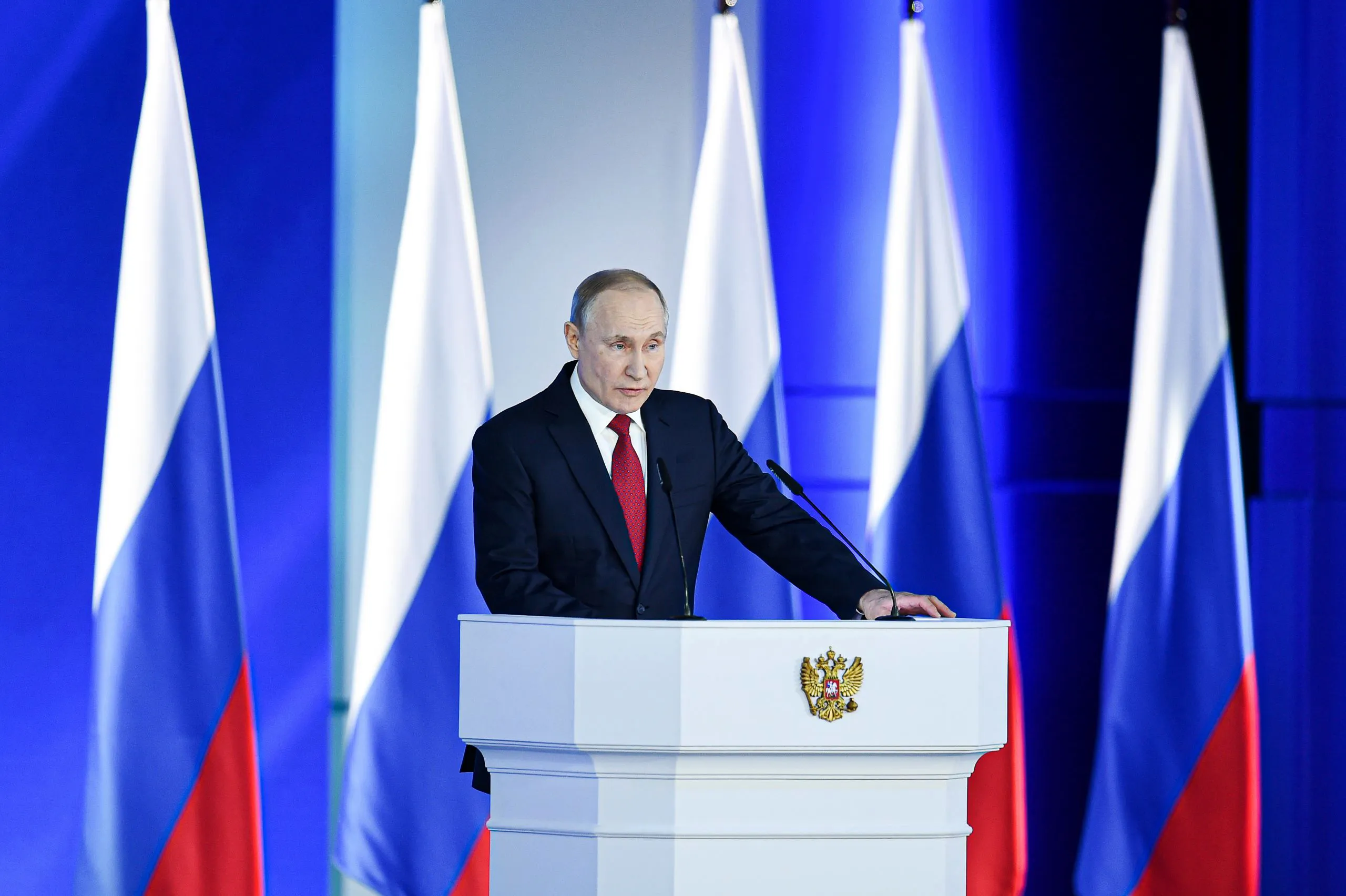
President Vladimir Putin has reinforced his central conditions for ending the war in Ukraine, insisting that Russia will halt its offensive only if Ukrainian forces withdraw from all areas claimed by Moscow.

Russia has repeatedly pushed for international recognition of the territories it seized by force, including Crimea — annexed in 2014 — and much of the eastern Donbas region, where fighting continues.
Ukraine has rejected any proposal that involves giving up the parts of Donetsk and Luhansk still under its control. Kyiv maintains that accepting Russia’s terms would reward aggression and violate its sovereignty.
Moscow Sticks to Its Position
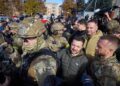
Speaking after Putin’s remarks, Ukraine’s President Volodymyr Zelensky accused Russia of dismissing genuine efforts to end the conflict. Meanwhile, during a visit to Kyrgyzstan, Putin argued that Kyiv preferred to fight “to the last Ukrainian,” adding that Russia was prepared to match that stance “in principle.”
Putin said the war would stop only once Ukraine withdrew completely from the Donbas.
“If they don’t withdraw, we will achieve this by force,” he said.
However, Russia’s gradual advances in eastern Ukraine have come at a heavy cost. The Institute for the Study of War estimates that, at the current pace, it could take nearly two years for Moscow to capture the remaining parts of the Donetsk region.
Peace Framework Under Review
Putin’s comments were his first reference to the intense diplomatic activity of the past week. The United States and Ukraine held discussions over a peace framework reportedly drafted in October by American and Russian officials.
The original document leaned heavily toward Moscow’s demands, but it was later revised during U.S.-Ukrainian talks in Geneva. European delegates also took part.
Yet the plan reportedly does not settle the fate of occupied territories — the central issue dividing Kyiv and Moscow — or the security guarantees Ukraine insists must be part of any agreement.
Putin said Russia had reviewed the updated draft and that it could serve as a “basis” for future negotiations. Still, he stressed that several points required “precise diplomatic wording” before any progress could be made.
Crimea and Donbas Remain the Core Dispute
Asked whether the international community might recognize Crimea and the Donbas as under Russian control de facto but not de jure, Putin said this question was part of ongoing discussions with the United States.
He confirmed that a U.S. delegation, including special envoy Steve Witkoff, was expected in Moscow early next week. President Donald Trump said Witkoff may travel with Jared Kushner.
Zelensky, in a late-night video statement, said Ukrainian and U.S. teams would meet “to translate the points agreed in Geneva into a form that advances peace and ensures security guarantees.”
Ukrainian officials also noted that U.S. Army Secretary Dan Driscoll was scheduled to visit Kyiv later in the week.
Few Issues Left, But Deep Tensions Remain
Trump said Wednesday that only “a few remaining points of disagreement” stood between Ukraine and Russia. Any direct meeting between Trump and Zelensky, he said, depended on whether a peace deal could be finalized.
Putin, however, again dismissed the legitimacy of Ukraine’s leadership, claiming there was “no point” in signing agreements with them. Ukraine has been under martial law since February 2022 and therefore unable to hold elections. Earlier this year, Ukraine’s parliament unanimously reaffirmed Zelensky’s mandate after his presidential term formally ended.
Putin also rejected European warnings that Russia could attack the continent within the coming decades.
“That sounds laughable to us,” he said.
While Washington and President Trump have expressed optimism about renewed diplomatic efforts, European leaders remain skeptical that Putin is genuinely seeking an end to the war.