











At first glance, rare earths sound obscure, specialist materials buried deep in technical reports and industrial supply chains. Yet these little-known metals sit quietly beneath some of the world’s most important economic and geopolitical tensions. From electric vehicles and wind turbines to advanced electronics and modern defence systems, rare earths underpin the technologies shaping the global economy. And today, control over these inputs has become a source of real trade leverage, one that China holds more than anyone else.
Understanding why rare earths matter, how China came to dominate them and why they increasingly feature in China-US trade talks helps explain a deeper shift in global economic power. This is no longer a world where tariffs alone determine outcomes. It is a world where control over inputs can matter more than control over markets.
What are rare earths?
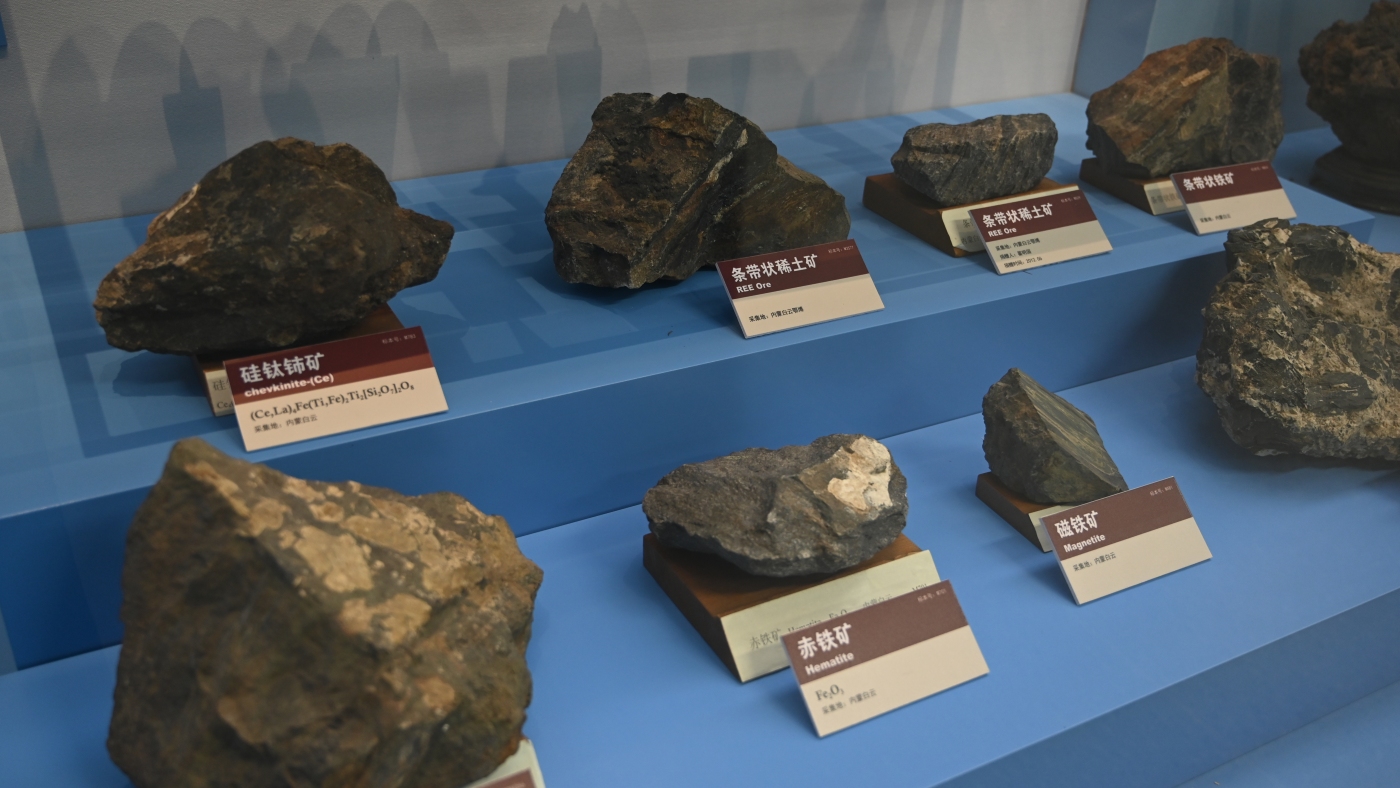
Rare earths are a group of 17 metallic elements used in small quantities but with outsized importance. Despite the name, they are not particularly rare in the Earth’s crust. What makes them “rare” in economic terms is not availability, but the difficulty of extracting, separating and processing them in a way that is commercially viable and environmentally acceptable.
These elements have unusual magnetic, chemical and optical properties that make them indispensable for high-technology applications. Crucially, they are difficult to substitute. When a product relies on rare earths, alternatives are often less efficient, more expensive or not available at all. This creates what economists call a supply bottleneck. Thus, small disruptions can have large downstream effects.
Why rare earths matter
Rare earths are embedded in nearly every technology associated with modern growth focused on green technologies. Permanent magnets made from rare earth elements are essential for EVs and large wind turbines. They are used in semiconductors, consumer electronics, energy-efficient lighting, medical equipment and advanced manufacturing. They also play a role in defence technologies, from guidance systems to communications equipment.
The global push toward clean energy has dramatically increased demand. Wind, solar, battery storage and electric transport all rely, directly or indirectly, on rare earth-based components. As energy systems electrify and digitalisation accelerates, demand for these metals grows far faster than overall commodity markets.
The economic significance of rare earths therefore lies not in their market value, which remains relatively small compared to oil or copper, but in their position within high-value industrial ecosystems. They are classic “small inputs, large consequences” goods.
How China came to dominate
China’s position in rare earths did not emerge by accident. Nor is it simply a matter of geology. While China does have substantial reserves, its dominance reflects decades of coordinated industrial policy.
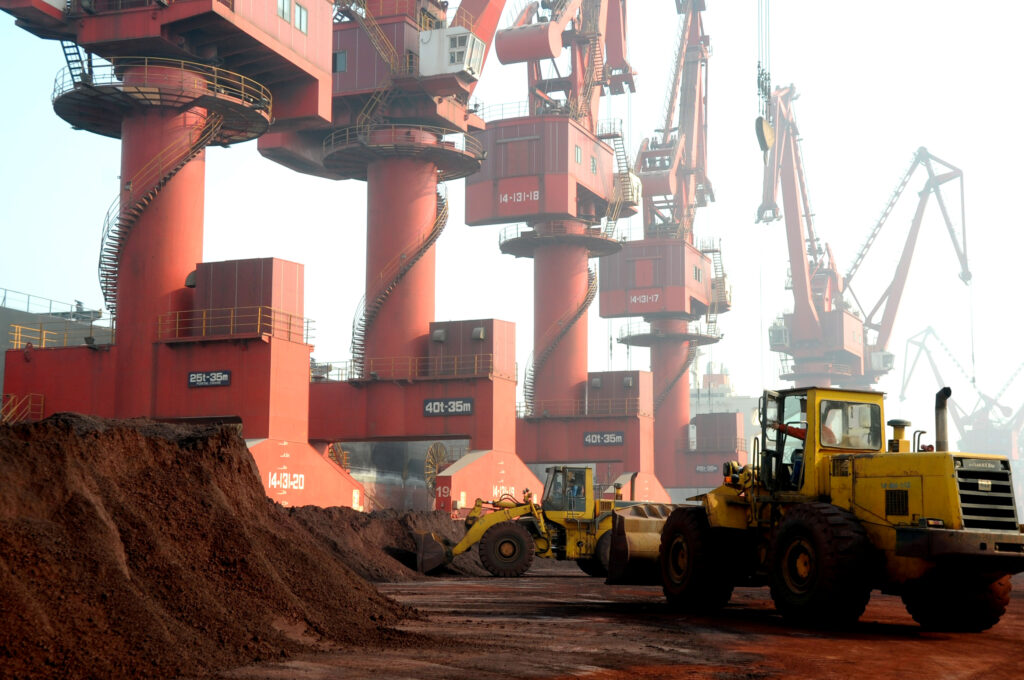
Beginning in the late twentieth century, China invested heavily in mining, refining and processing capacity, while many Western producers scaled back. Stricter environmental standards, high costs and limited policy support made rare-earth processing increasingly uncompetitive elsewhere. China, by contrast, accepted environmental costs early on, provided cheap energy and credit and built scale rapidly.
Just as important, China did not stop at mining. It concentrated power in the middle of the value chain, that is, separation, refining and magnet manufacturing, where most economic rents are earned. Over time, industry consolidation brought production under close state oversight, allowing authorities to influence output, prices and exports.
Today, China controls most of the rare-earth processing and an even larger share of high-value downstream products such as permanent magnets. This matters more than headline figures on mining because firms cannot easily bypass processing constraints even if alternative mines exist.
Rare earths and China–US trade tensions
This structural dominance gives China leverage and trade tensions with the United States have brought this into sharp focus. Whenever relations deteriorate, rare earths move from being an obscure industrial input to a strategic bargaining chip.
Unlike tariffs, which are blunt and often economically costly to both sides, export controls on rare earths are targeted and asymmetric. They exploit dependency. When supply tightens or approvals slow, downstream industries, from automotive manufacturing to clean-energy deployment feel the pressure almost immediately.
This explains why rare earths consistently surface in trade discussions, even when other issues dominate headlines. For the United States, dependence on Chinese processing capacity represents a vulnerability that cannot be resolved quickly. For China, maintaining that position offers influence without formal confrontation.
Notably, China rarely treats export restrictions as permanent. Instead, they function as signalling mechanisms, reminding its trading partners where leverage lies. Overuse would accelerate diversification elsewhere and erode long-term power. Used selectively, however, rare earths strengthen China’s hand in negotiations.
Why tariffs struggle to change the balance
Recent trade measures highlight an uncomfortable truth for industrial economies: tariffs on finished products do little to reduce upstream dependence. China’s clean-energy exports, for instance, are increasingly oriented toward developing economies rather than the United States or Europe. Even when tariffs rise, global demand, particularly in the Global South remains strong.
More importantly, tariffs cannot replicate years of industrial coordination. China’s advantage rests on integrated supply chains, massive domestic demand and sustained policy support. Without comparable strategies, attempts to decouple rely on subsidies and protection, often at high fiscal cost and with uncertain long-term competitiveness.
Efforts are underway in the United States and allied countries to rebuild domestic capability. Yet these projects face long lead times, environmental constraints and financial pressures. In the short to medium term, dependence remains.
What this means for the global economy
Rare earths reveal a broader shift in how economic power is exercised. Influence today does not come only from exporting more or imposing higher tariffs. It comes from shaping the terms under which entire industries operate.
For developing economies, particularly resource-rich ones, this carries an important lesson. Control over raw materials alone delivers limited benefits. Value lies in processing, industrial linkages and coordination. The rare-earth story is as much about development strategy as it is about geopolitics.
For the global system, it marks the end of neutral supply chains. Economic policy is becoming strategic and strategic inputs are becoming instruments of negotiation.
A quiet but durable advantage
Rare earths may remain hidden from public view, but their influence is anything but subtle. They sit at the intersection of energy transition, technological competition and global trade. China’s dominance does not guarantee permanent advantage, but it does provide leverage, that is, quiet, flexible and difficult to counter quickly.
As trade tensions ebb and flow, rare earths will continue to matter not because they grab headlines but because they shape outcomes. In today’s global economy, the power balance is increasingly determined not at the border but deep inside the supply chain where these hidden metals reside.