







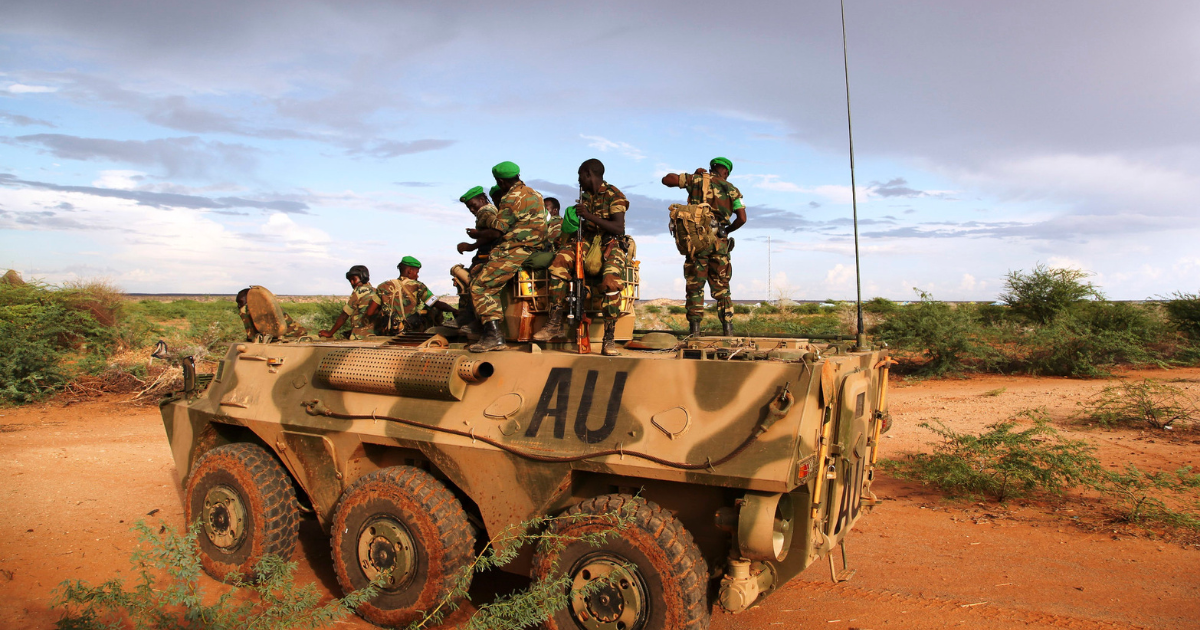
The African Union Support and Stabilisation Mission in Somalia (AUSSOM) represents another attempt by foreign troops to bring peace to Somalia. But after decades of similar missions, it’s time to accept a hard truth: stability in Somalia will only come when Somalis defend their own country.
AUSSOM: A Familiar Mission with Familiar Problems
AUSSOM replaced the African Union Transition Mission in Somalia (ATMIS) on January 1, 2025. It was created with the promise of being leaner, faster, and better aligned with Somalia’s national priorities. Yet, less than a year into its mandate, it faces the same obstacles — financial shortfalls, overstretched forces, and declining donor interest.
The mission has about 11,826 uniformed personnel, including 680 police officers, supported by a handful of civilian staff. Their goal is to combat al-Shabaab and help Somalia’s forces take full control by 2029. But that target looks increasingly unrealistic without sustainable funding or political consensus.
Foreign Troops Cannot Build Lasting Security
Somalia’s recent history shows that foreign-led missions can suppress violence temporarily, but they cannot create lasting peace. Every peacekeeping mission — from AMISOM to ATMIS, and now AUSSOM — has depended on external funding and international goodwill.
When the money dries up, the progress collapses. Troop-contributing countries struggle to pay soldiers’ stipends. Local populations lose faith. Al-Shabaab regroups. The cycle begins again.
No nation ever secured its sovereignty through rented armies. If Somalia wants peace that lasts beyond any mandate, it must build a strong, professional, and self-sufficient national army.
Build Somali Capacity, Not Dependency
Foreign troops have their role, but their presence should complement, not replace, Somali-led security. The Somalia Security Development Plan (SSDP) and the National Security Architecture (NSA) offer a clear framework for building domestic forces. What’s missing is the commitment and resources to make them work.
Instead of funding foreign missions with $160 million a year, international partners should direct those resources toward training, equipping, and sustaining Somali soldiers and police officers. This approach would strengthen Somalia’s sovereignty and reduce dependency on external actors.
It would also boost morale among Somali troops, who often feel sidelined in their own country’s defence strategy. Empowering them would send a strong message: that Somalia’s security belongs to Somalis.
AUSSOM’s Financial Struggles Prove the Point
The current mission’s financial crisis shows how unsustainable the foreign-troop model has become. AUSSOM inherited more than $100 million in debt from ATMIS and faces a $92 million shortfall in 2025 alone.
The United Nations had planned to cover 75% of costs under Resolution 2719, with the African Union covering 25%. But that plan fell apart in May 2025, when the Security Council failed to approve funding.
Since then, the mission has survived on scattered donor pledges, while European Union support dropped from €70 million to €60 million this year. African Union emergency funds cover barely 12% of the annual budget.
How can such an unstable setup create stability in Somalia?
The Cost of Endless Dependence
Foreign soldiers will eventually leave, but the Somali people will stay behind. Each new mission promises a smooth transition to Somali control, but without real investment in national institutions, those promises ring hollow.
Somalia’s army must not remain an afterthought or a backup plan. It should be the centrepiece of any strategy to defeat al-Shabaab and rebuild the state. Training, logistics, and equipment should all be tailored toward local capacity.
As one Somali analyst recently said, “We don’t need new uniforms with AU badges. We need a national army that can stand when everyone else leaves.”
A Sustainable Solution for a Sovereign Nation
True stability will come when Somalia no longer needs international troops to keep the peace. That requires patient, consistent investment in Somali security forces, governance, and political unity — not temporary interventions.
The international community should help Somalia build its army, not borrow others. That’s the only path to sustainable peace and national dignity. Until then, every new mission — no matter its name — will only delay the inevitable: Somalia must secure itself.