











For much of Africa’s post-independence history, transport corridors were viewed primarily as development infrastructure, that is, railways and roads intended to move goods, open markets and reduce isolation. Today, that framing is no longer sufficient. Africa’s major trade corridors are increasingly shaped not only by development priorities but by geopolitics, mineral demand and global competition.
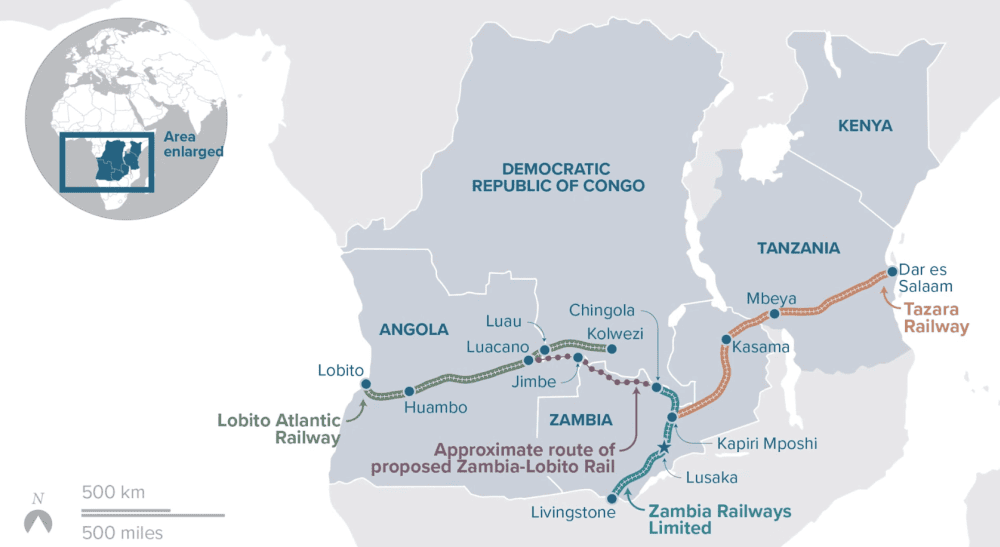
Few projects illustrate this shift more clearly than the TAZARA Railway (covering Tanzania and Zambia) and the Lobito Corridor (covering Angola, DR Congo and Zambia). Stretching across Southern and Central Africa, these corridors now sit at the centre of a new geopolitical economy, one in which infrastructure is capital, trade routes are strategic assets, and African countries must make deliberate choices if they are to benefit sustainably.
Corridors and the New Geopolitics of Infrastructure
TAZARA and Lobito represent two different but converging geopolitical logics.
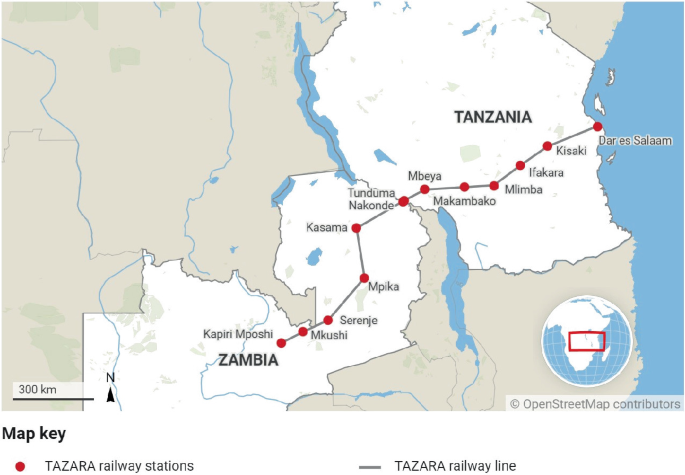
TAZARA, linking Zambia to the Tanzanian port of Dar es Salaam, remains one of the most symbolic infrastructure projects of the “East”, financed and built by China at the height of the Cold War to give landlocked Zambia strategic autonomy from apartheid-era southern routes. Today, its revival continues within a China-centred framework of infrastructure diplomacy.
The Lobito Corridor, by contrast, has emerged as a flagship project of Western-backed engagement in Africa. Anchored at Angola’s Port of Lobito and extending through the Democratic Republic of Congo into north-western Zambia, its revival has attracted substantial financing and political support from the European Union, its development finance institutions and allied partners.
This contrast is not accidental. Infrastructure has become a central arena through which global powers seek long-term influence and not through control but through presence, financing, standards and embedded economic relationships. Africa’s corridors are no longer peripheral. They are strategic.
Billions Flowing into Steel and Rails
The Recent financing commitments underline this reality. The Lobito Corridor has attracted multi-billion-euro commitments under the EU’s Global Gateway strategy, combining grants, concessional loans, development finance and private investment. Funding targets not only rail rehabilitation and logistics platforms but also trade facilitation, skills development and value-chain support along the corridor.
At the same time, TAZARA is set for a reported US$1.4 billion modernisation, aimed at rehabilitating aging infrastructure, upgrading locomotives and signalling systems and restoring operational capacity along one of Africa’s most historically significant railways. The scale of this investment signals a renewed strategic interest, not simply nostalgia.
These are not isolated decisions. They reflect a recognition that Africa’s interior which was once treated as economically distant is now central to global supply chains.
Minerals, Green Transitions and Corridor Economics
A key driver of renewed interest in both corridors is minerals. The territories traversed by TAZARA and Lobito are rich in copper, cobalt, manganese and other critical minerals essential to the global green and digital transitions. As demand for electric vehicles, renewable energy systems and battery technologies accelerates, so too does the need for reliable, cost-efficient routes from mine to port.
Corridors reduce transport costs, shorten lead times and improve supply reliability. These are factors that matter as much to investors as mineral abundance itself. In this sense, today’s rail investments are as much about the future of global energy systems as they are about African trade.
Yet the economic risks are also clear. If corridors simply function as extraction pipelines, Africa’s role remains narrowly defined, that is, exporting raw value while importing finished goods. Infrastructure alone does not guarantee development; policy choices do.
AfCFTA and the Promise of Intra-African Trade
This is where the African Continental Free Trade Area (AfCFTA) becomes critical. TAZARA and Lobito have the potential to do more than move exports overseas. Properly integrated, they can restructure intra-African trade, linking producers to regional markets, enabling agro- processing, supporting manufacturing clusters and reducing fragmentation across borders.
Corridors lower trade costs not only for minerals but for food, industrial inputs and consumer goods. They create opportunities for logistics hubs, inland ports, processing zones and services. While negative effects such as uneven development or congestion are possible, the net economic gains from improved connectivity are substantial when coupled with complementary policies. The danger is not the corridors themselves, but underutilisation.
From Land-Locked to Land-Linked
Perhaps the most transformative potential of TAZARA and Lobito lies in redefining geography. For decades, landlocked countries like Zambia and those in the central African interior faced structural disadvantages: high transport costs, long delays and weak bargaining power. Modern corridors change this equation.
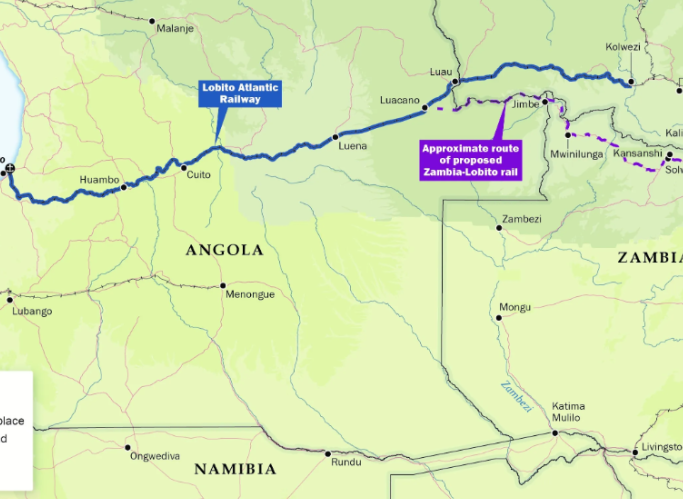
By offering multiple, competitive routes to ports, corridors turn land-locked economies into land-linked ones. This enhances resilience, reduces dependency on single routes and strengthens negotiating leverage in global trade.
However, land-linkedness is not automatic. It requires investment in feeder roads, dry ports, border efficiency, digital customs systems and regulatory harmonisation. Corridors do not function in isolation; they are only as effective as the infrastructure that connects to them.
African Agency: The Most Important Variable
The central economic question, however, is not who funds these corridors but how countries along them position themselves. African governments must avoid a passive posture. Corridors should not merely pass through countries; they must anchor development strategies. This means:
- Demanding value-chain participation, not just transit fees
- Embedding local processing, smelting and manufacturing along corridor routes
- Insisting on technology transfer and skills development from construction through operations
- Using corridors to support industrial parks, agro-processing zones and logistics services
- Coordinating regionally to prevent a race to the bottom in concessions and incentives
There are global precedents where infrastructure-led strategies were used to climb value chains. The lesson is clear: corridors can either entrench dependency or catalyse structural transformation.
Choosing Outcomes, Not Sides
TAZARA and Lobito reflect different sources of finance and geopolitical alignments, but Africa’s choice needs not be between East and West. The real choice is between extraction and integration, between transit and transformation. In a world where infrastructure has become geopolitics by other means, African countries must engage strategically, that is, maximize benefits, manage risks and assert agency. Corridors are not destiny; policies are. Handled well, TAZARA and Lobito can do more than move minerals to ports. They can reshape trade geography, deepen integration and convert Africa’s position from periphery to pivot in the global economy. That outcome will depend less on who builds the rails and more on what Africa decides to do with them.