













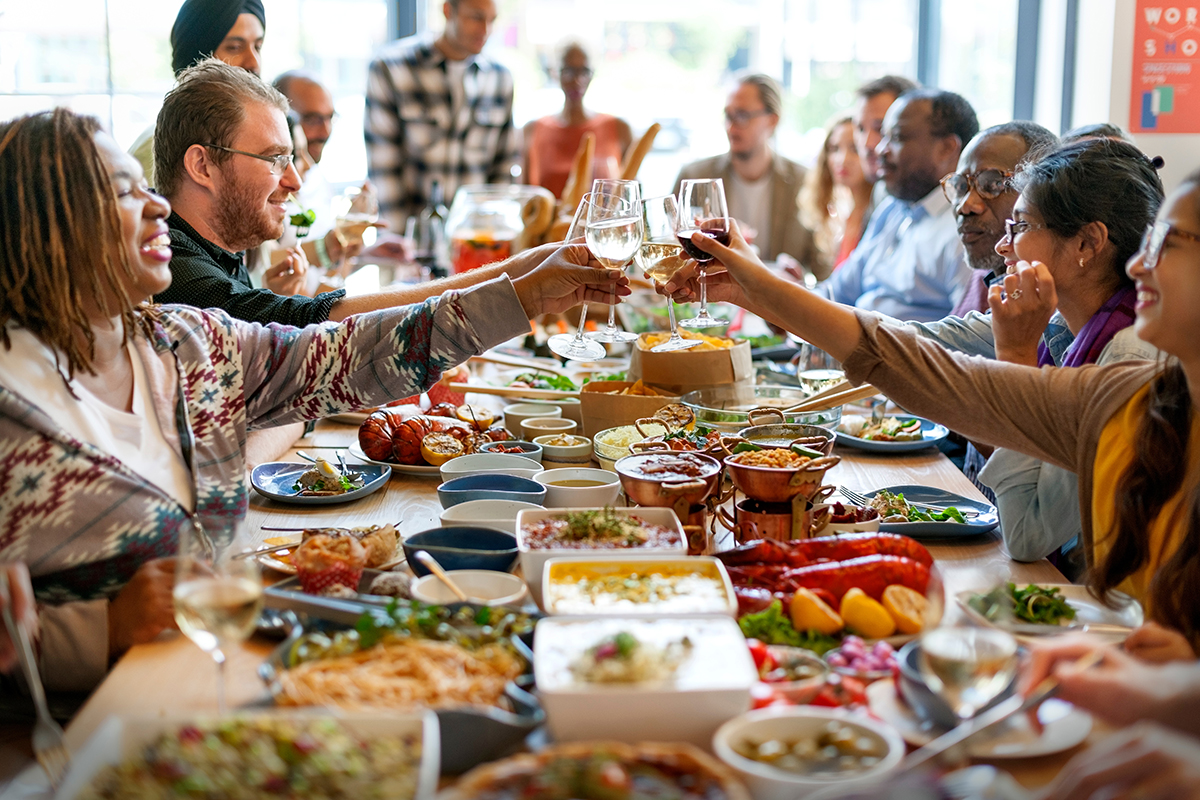
Humans have always gathered around food. For thousands of years, communities have shared meals, celebrated with feasts, and created rituals around eating together. Even today, we meet friends for dinner, host holiday meals, or enjoy simple family gatherings. But why does this tradition endure? And what makes shared meals so powerful?
The Universal Habit of Eating Together
Across cultures, sharing food is a near-universal human behavior. We sit down, eat together, and often enjoy the experience more than eating alone. Concerns about declining family dinners appear regularly in public debates, yet the idea itself is not new. For more than a century, societies have worried about losing the habit of eating together.
The persistence of this tradition suggests it is more than cultural—it is deeply rooted in who we are.
The Evolutionary Roots of Sharing Food
The practice of eating together may stretch back before modern humans appeared. Our closest primate relatives, chimpanzees and bonobos, also share food with members of their social groups. But, as sociologists note, simply giving food is not the same as gathering for a shared meal. Humans added layers of meaning, ritual, and interaction.
A likely early setting for shared meals was the campfire. No one knows exactly when humans first mastered cooking, but once our ancestors hunted, gathered, built fires, and prepared food, they likely did so in groups. Sitting together around a fire—warm, bright, and safe—may have offered the perfect space for social bonding.
The Social Power of Shared Meals
Modern research supports the idea that eating together strengthens relationships. In a 2017 study in the United Kingdom, anthropologist Robin Dunbar found that people who ate with others more often reported higher levels of happiness and social support. Statistical analysis also suggested that shared meals caused stronger social bonds—not the other way around.
According to Dunbar, eating activates the brain’s endorphin system, which plays a key role in social bonding among primates. Eating together boosts this effect, much like group exercise. The simple act of sharing food literally brings people closer.
Why Sharing Food Builds Trust
Sharing the same food can also build trust. Studies show that people who eat the same item—even a small candy—are more likely to cooperate. They negotiate faster, trust each other more readily, and reach agreements sooner. Psychologists suggest this may reflect ancient instincts: shared tastes once signaled shared values, safety, and belonging.
The Complicated Side of Eating Together
Despite its benefits, eating together is not always positive. Feasts can reinforce hierarchy and power. Throughout history, wealthy hosts have used grand meals to demand loyalty or display control. Even today, workplace dinners or holiday gatherings can carry hidden expectations.
Family meals can also vary widely in emotional experience. While many people enjoy them, others find them stressful. Meals that involve criticism, judgment, or conflict can damage wellbeing rather than support it.
When Eating Alone Isn’t a Problem
Interestingly, eating alone is not always harmful. Research in Sweden shows that many older adults do not feel distressed when they dine alone. They appreciate company but do not suffer greatly when they lack it—unless they already experience deep loneliness. In such cases, solitary meals may intensify feelings of isolation.
Why Shared Meals Still Matter
Even with digital lives and busy schedules, the tradition of eating together remains powerful. Shared meals help us build relationships, manage stress, and feel connected. They deepen trust, create memories, and remind us that food is more than fuel—it is a social experience woven into human history.
As long as people gather, talk, laugh, and share food, the ancient tradition of feasting together will continue.